KubeDiagrams: Transforming Kubernetes Manifests into Architecture Diagrams
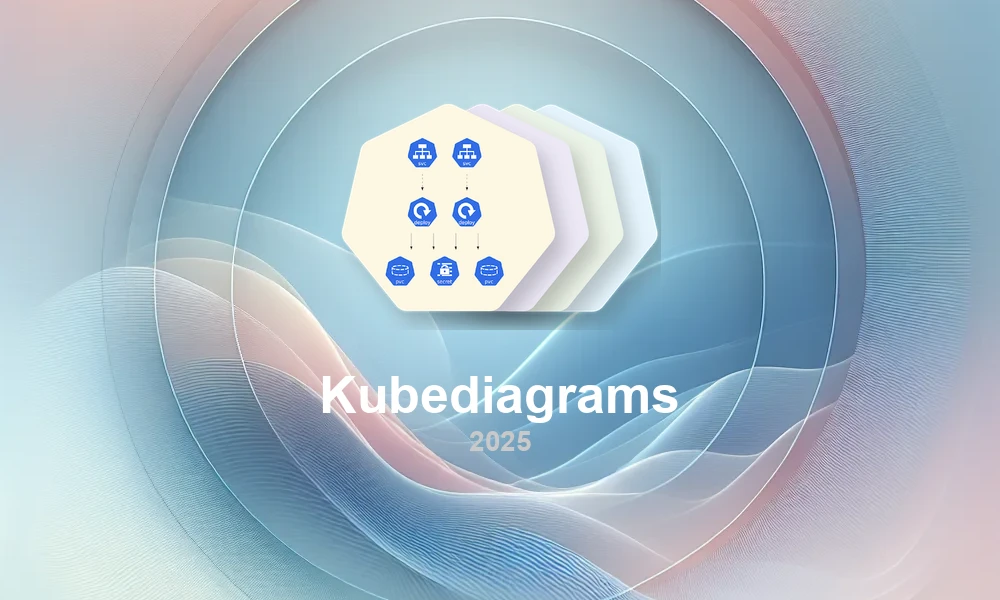
Table of Contents
Introduction
If your “architecture diagram” lives in a slide deck that nobody updates, you already know the problem: Kubernetes changes constantly, and documentation becomes stale the moment it’s most needed—during onboarding, reviews, and incidents.
KubeDiagrams, introduced in May 2025, is an open-source tool that turns Kubernetes manifests (and Helm output) into architecture diagrams. It’s built around real-world visualization practices: preserving Kubernetes semantics while making relationships and dependencies easier to reason about.
Why this matters in practice
- Onboarding: new engineers can map “what runs where” without mentally parsing dozens of YAML files.
- Review and change control: diagrams-as-code make diffs and architecture discussions less subjective.
- Troubleshooting: seeing resource relationships can surface “hidden” dependencies faster than log spelunking.
- Documentation hygiene: generated diagrams are harder to forget to update.
Manifest-to-Diagram Transformation
- Automatic generation automatically generates architecture diagrams from Kubernetes YAML manifests and Helm charts.
- Multi-format support processes standard Kubernetes resources including Deployments, Services, Ingress, ConfigMaps, and more.
- Relationship mapping visualizes relationships and dependencies between Kubernetes resources.
- Semantic preservation maintains semantic fidelity to core Kubernetes concepts in visual representation.
Comprehensive Visualization
- Resource hierarchy displays the hierarchical structure of Kubernetes resources across namespaces and clusters.
- Network topology shows network connections, service dependencies, and traffic flow patterns.
- Storage relationships visualizes PersistentVolumes, PersistentVolumeClaims, and storage class relationships.
- RBAC visualization represents role-based access control structures and service account relationships.
Enhanced System Comprehension
- Visual navigation provides intuitive visual navigation of complex Kubernetes deployments.
- Component identification quickly identifies components, their roles, and relationships in the system.
- Dependency analysis visualizes dependencies between applications, services, and infrastructure components.
- Multi-level views supports both high-level architectural views and detailed resource-level diagrams.
Architectural Reasoning
- Design documentation generates documentation-quality diagrams for system design and architecture reviews.
- Change visualization tracks and visualizes changes in system architecture over time.
- Impact analysis helps understand the impact of changes before applying them to clusters.
- Best practices highlights potential architectural issues and suggests improvements based on Kubernetes best practices.
Developer Experience
- Easy integration integrates seamlessly with existing Kubernetes workflows and CI/CD pipelines.
- Export options exports diagrams in multiple formats including PNG, SVG, PDF, and interactive HTML.
- Customization allows customization of diagram styles, layouts, and detail levels.
- Version control generates diagrams as code, enabling version control and automated updates.
Real-World Use Cases
- Onboarding accelerates onboarding of new team members by providing visual system documentation.
- Architecture reviews supports architecture reviews and design discussions with clear visual representations.
- Documentation automatically generates and maintains up-to-date architecture documentation.
- Troubleshooting aids troubleshooting by visualizing system structure and relationships.
Getting Started
# Install KubeDiagrams
curl -L https://github.com/kubediagrams/kubediagrams/releases/latest/download/install.sh | bash

# Generate diagram from Kubernetes manifests
kubediagrams generate -f deployment.yaml -o architecture.png

# Generate diagram from live cluster
kubectl get all -n production -o yaml | kubediagrams generate -o production-arch.png

# Generate interactive HTML diagram
kubediagrams generate -f deployment.yaml -o architecture.html --format html
Generate diagram from Helm chart:
# Generate diagram from Helm chart
helm template my-app ./chart | kubediagrams generate -o chart-architecture.png

# Include all resources
kubediagrams generate -f deployment.yaml service.yaml ingress.yaml -o full-architecture.png
Define custom diagram configuration:
# kubediagrams.yaml
apiVersion: kubediagrams.io/v1alpha1
kind: DiagramConfig
metadata:
  name: production-architecture
spec:
  outputFormat: png
  style: modern
  includeNamespaces:
    - production
    - staging
  resourceFilters:
    - kind: Pod
      exclude: true
  layout:
    direction: left-to-right
    grouping: namespace
Integration Options
- CI/CD integration automatically generates diagrams as part of CI/CD pipelines for documentation updates.
- Git hooks generates diagrams on commit or push to keep documentation synchronized.
- Kubernetes operators provides Kubernetes operators for continuous diagram generation from cluster state.
- API access exposes REST APIs for programmatic diagram generation and integration with other tools.
Supported Resource Types
- Workloads: Deployments, StatefulSets, DaemonSets, Jobs, CronJobs
- Services: Services, Endpoints, Ingress, Gateway API resources
- Configuration: ConfigMaps, Secrets, ServiceAccounts
- Storage: PersistentVolumes, PersistentVolumeClaims, StorageClasses
- Networking: NetworkPolicies, ServiceMeshes, CNI configurations
- RBAC: Roles, RoleBindings, ClusterRoles, ClusterRoleBindings
Summary
| Aspect | Details |
|---|---|
| Release Date | May 2025 |
| Headline Features | Manifest-to-diagram transformation, comprehensive visualization, enhanced system comprehension, architectural reasoning |
| Why it Matters | Transforms complex Kubernetes configurations into intuitive visual representations, dramatically improving understanding, documentation, and communication of cloud-native architectures |
KubeDiagrams fills a critical gap in the Kubernetes ecosystem, providing developers, architects, and operators with powerful visualization tools that make complex distributed systems more understandable, documentable, and manageable.