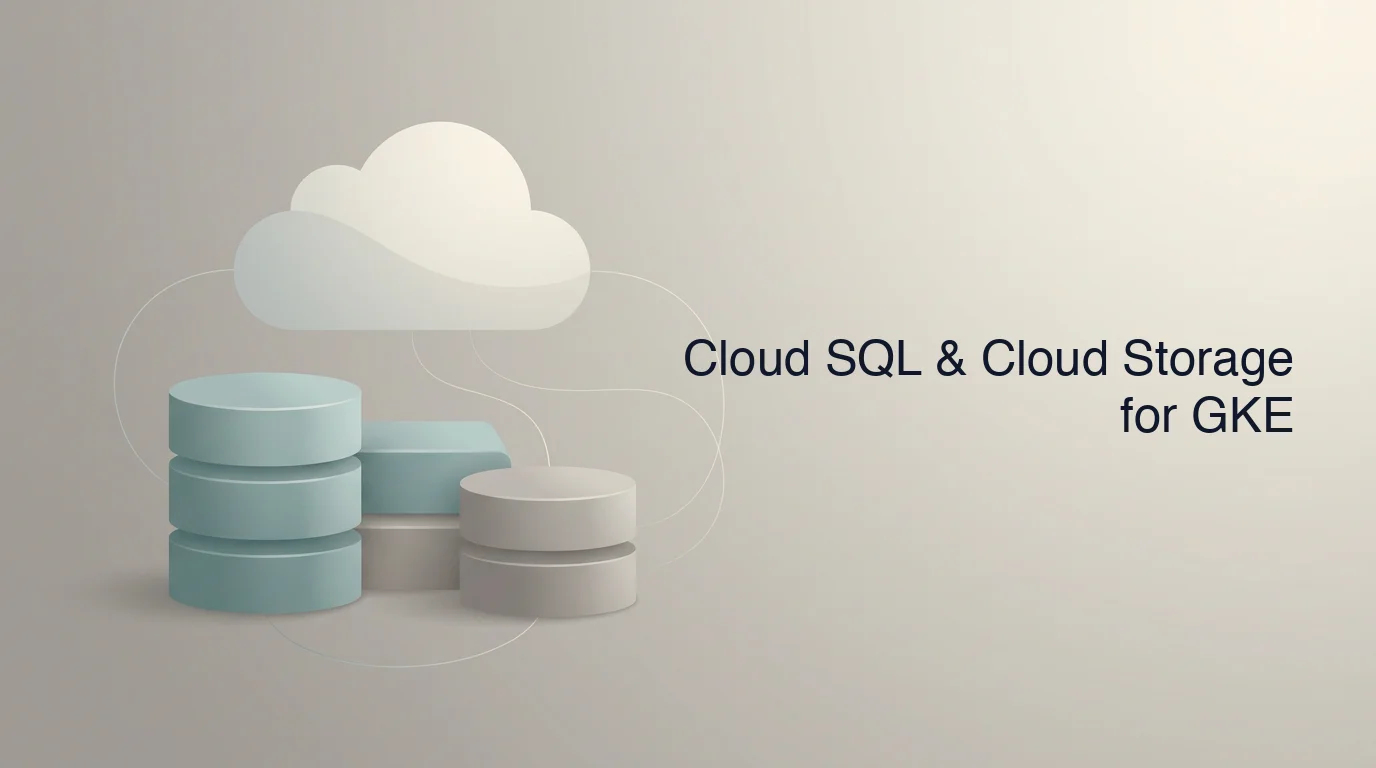
Connecting GKE to Cloud SQL and Cloud Storage with Terraform
Terraform patterns for private Cloud SQL and GCS next to GKE: VPC peering, IAM, and how workloads should connect—without duplicating generic storage theory.
K8s Guru
Read More
5 min
Terraform patterns for private Cloud SQL and GCS next to GKE: VPC peering, IAM, and how workloads should connect—without duplicating generic storage theory.
How to structure Terraform modules and Terragrunt live configs for a small cost-aware GKE cluster on GCP: remote state, VPC-native networking, and composable stacks.
Reduce Kubernetes cost in 2026: right-size with VPA, node efficiency with Karpenter, autoscale with HPA/KEDA, add FinOps visibility and chargeback.
GitOps 2026: compare Argo CD and Flux, OCI/Helm maturity, progressive delivery. When to choose which for Kubernetes and fleet management.
Kubernetes and cloud native in 2026: platform contracts, AI governance, GitOps maturity, cost optimization, and zero-trust. Priorities for teams.
Kubernetes 1.35 (2026) brings ML job orchestration, cluster-level automation, network observability, and Gateway API conformance. See what's new and how to upgrade.
Comprehensive overview of the Kubernetes security ecosystem in 2025, covering tools, best practices, security maturity models, and future trends.

Thanos 0.34 delivers improved long-term storage, enhanced query performance, better reliability characteristics, and expanded integration capabilities for comprehensive Prometheus high availability.
A comprehensive retrospective on Kubernetes autoscaling evolution from 2016 to 2025—covering the current landscape, emerging patterns, cost optimization strategies, and future trends.

Helm 3.14 delivers improved chart management, enhanced security features, better OCI support, and expanded integration capabilities for comprehensive Kubernetes package management.